
Expat Tax Planning 2026

US Expat Taxes
A Complete Guide for Americans Abroad

Tax rules, compliance requirements, and strategies for managing US tax obligations while living abroad. This guide covers everything American expats, digital nomads, and retirees need to know about staying tax-compliant internationally.

Tax documents and forms
📅 Last Updated: July 13, 2026 | ⏱️ 10 min read

Who This Guide Is For

If you're a remote worker, employee, retiree, or business owner living anywhere outside the United States, this guide is for you. Digital nomads, corporate transferees, retirees, and business owners with foreign operations all face the same starting point: the US taxes citizens on worldwide income no matter where they live. This page covers the core rules that apply everywhere, then points you to the country-specific detail you actually need.

Retired US expat couple holding hands on beach enjoying retirement abroad

Quick Overview: Core US Tax Obligations Abroad

The Basic Conflict: Most countries tax based on residency. The US taxes based on citizenship. Living somewhere with a lower (or zero) local tax rate doesn't remove your US filing obligation, it just changes which relief tools you rely on.

Filing threshold: File Form 1040 if your worldwide gross income exceeds roughly $10,000 ($400 if self-employed), regardless of how much US tax you actually end up owing after exclusions.

Retirement plan documents with glasses and calculator for US expat tax planning

Foreign Earned Income Exclusion (FEIE): Form 2555 shields up to $130,000 of earned income (2025) if you qualify via the Physical Presence Test (330 days outside the US in 12 months) or the Bona Fide Residence Test.

Foreign Tax Credit (FTC): Form 1116 credits foreign income tax you've already paid against your US liability, the stronger tool in higher-tax countries, though it depends entirely on whether your destination country actually taxes you.

FBAR & FATCA: FinCEN Form 114 (FBAR) is required if your combined foreign accounts exceed $10,000 at any point in the year. Form 8938 (FATCA) applies at higher asset thresholds. Both are independent of whether you owe any actual tax.

Country-Specific Detail

The Rules Above Are Only Half the Picture

FEIE, FTC, and FBAR are constant wherever you live. What changes country to country is local tax residency rules, whether a tax treaty exists, local reporting obligations, and how retirement or severance payouts are treated. Pick your country below for the full breakdown, this directory grows as we publish new country guides.

Thailand →

180-day tax residency, the remittance doctrine, PND 90 filing, and an active US-Thailand tax treaty.

Oman →

No local income tax (until 2028), no US tax treaty, and why FEIE carries almost your entire strategy.

More Countries Coming

We're expanding country coverage. Tell us where you're headed if your destination isn't listed yet.

Income Strategy

Choosing Between FEIE and FTC

You can't use both on the same dollar of income, so the right choice depends almost entirely on your destination country's local tax rate.

Zero or low-tax countries (e.g. Oman, most of the Gulf): FEIE almost always wins, there's little or no local tax to credit, so excluding the income directly is the stronger move.

Higher-tax countries with a treaty (e.g. Thailand above the FEIE cap): FTC can outperform FEIE once local tax paid exceeds what FEIE alone would have saved you, and it keeps future Social Security and retirement account contribution room open in ways FEIE-excluded income doesn't.

Common Myths

Myth: "My country has no income tax, so I owe nothing." Reality: You still owe US tax on income above the FEIE cap, and self-employment tax regardless of FEIE if there's no Totalization Agreement in place.

Myth: "If I never remit money back to the US, none of this applies." Reality: The US taxes worldwide income as earned, not as remitted, remittance-based rules are a local-country concept (Thailand has one; most countries don't), not a US one.

Foreign income planning
Visa planning for expats

Visa Strategy

Your Visa Type Shapes Your Tax Outcome

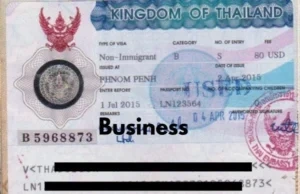
Employment visas, retirement visas, digital nomad permits, and sponsorship-tied residency all carry different tax-residency triggers and planning windows. The specific test varies by country, Thailand counts days toward a 180-day threshold, Oman ties residency to your employer sponsorship, but the pattern is universal: your visa status shapes both employment rights and your FEIE qualification path.

  • Day-count-based visas (digital nomad, tourist-adjacent) favor the Physical Presence Test
  • Long-term employment or retirement visas often support the Bona Fide Residence Test instead
  • Sponsorship-tied residency (common across the Gulf) can interrupt Bona Fide Residence status if your job changes

Documents to Keep and Forms to File

Local forms and deadlines vary by country, see your country guide above for the specifics (Thailand's PND 90/91, for example). The US side is constant wherever you live:

US Side (Form 1040 Filing)

Keep for at least 6 years: W-2 or 1099 from your employer, local tax receipts (if any), passport stamps, lease, visa documents, bank statements, investment statements with gains and dividends.

Key Forms & Filing Deadlines

US: Form 1040, Form 2555 (FEIE) or Form 1116 (FTC), FinCEN Form 114 (FBAR), Form 8938 (FATCA). Deadlines: April 15 (income tax, automatic 2-month extension abroad to June 15), October 15 (extended deadline and FBAR automatic extension).

Tax consultation

Expert Guidance

When to Consult a Specialist

  • Multiple Income Sources: Coordinating FEIE and FTC across salary, investments, and business income.
  • Business Ownership: Foreign entities carry GILTI exposure and separate reporting requirements.
  • Large Transfers: $50,000+ moves between accounts. Timing strategy can save thousands.
  • Capital Gains: Selling US stocks or foreign property triggers both local and US tax exposure.
  • Visa or Country Changes: Relocating between countries mid-year complicates residency tests on both sides.

FAQ: US Expat Taxes Abroad

Q: Do I owe US tax if my destination country has no income tax at all? A: Yes. US filing is based on citizenship, not local tax rates. Zero local tax just means the Foreign Tax Credit has nothing to offset, you'll rely on the FEIE instead.

Q: Which qualifying test should I use for the FEIE? A: The Physical Presence Test (330 days outside the US in any 12-month period) is simpler to prove and works well for shorter stays or frequent travelers. The Bona Fide Residence Test requires a full uninterrupted tax year of genuine residency but doesn't cap your US travel days the same way.

Q: What's the FBAR threshold? A: $10,000 aggregate across all foreign financial accounts, at any single point in the calendar year, not just on December 31. This applies regardless of whether you owe any actual tax.

Q: Does my home US state still tax me after I move abroad? A: Depends on the state. Some (California, Virginia, New Mexico, South Carolina) are notoriously aggressive about not releasing residency status. Review your specific state's domicile rules before assuming you're free of state tax.

Q: Should I invest through a local bank or brokerage abroad? A: Generally avoid it. Foreign mutual funds and investment-linked products are usually classified by the IRS as Passive Foreign Investment Companies (PFICs), taxed punitively. Keep your investment portfolio in a US-based brokerage with an expat-friendly custodian.

Q: I'm self-employed abroad, does the FEIE cover self-employment tax too? A: No. FEIE shields income tax, not the 15.3% self-employment tax (Social Security and Medicare), unless the country you're in has a Totalization Agreement with the US that offsets it. Many popular expat destinations, including most of the Gulf, don't have one.

For the specific rules that apply in your destination, see our country guides: Thailand and Oman.

Ready to Get Started?

Wherever you're living or planning to move, our specialists can walk you through your specific FEIE, FTC, and FBAR obligations. Schedule your consultation today.

Key Topics for US Expats Worldwide

The $120k Threshold: FEIE vs FTC

Choose between Foreign Earned Income Exclusion and Foreign Tax Credit. Critical for all expat income strategies.

The FBAR Crackdown 2026

Foreign account reporting requirement. Understand FBAR, FATCA, and Streamlined Filing amnesty options.

Tax Treaty Optimization 2026

Bilateral tax treaties reduce double taxation. Essential for expats in high-tax countries.

The Corporate Trap 2026: GILTI

If you own a foreign company, GILTI rules create unexpected tax liability. Learn safe structures.

AI & The Modern Tax Agent 2026

IRS algorithms automatically flag returns. Understand audit triggers and stay algorithmically compliant.

ESG & Ethical Taxation 2026

Green investments and ESG credits offset tax liability. Discover how to leverage sustainability for savings.