
Oman Tax Guide 2026

FEIE & Oman's
Tax-Free Income

With no local income tax and no treaty, the Foreign Earned Income Exclusion carries almost the entire weight of your US tax strategy in Oman. Here's how to qualify, and where it stops covering you.

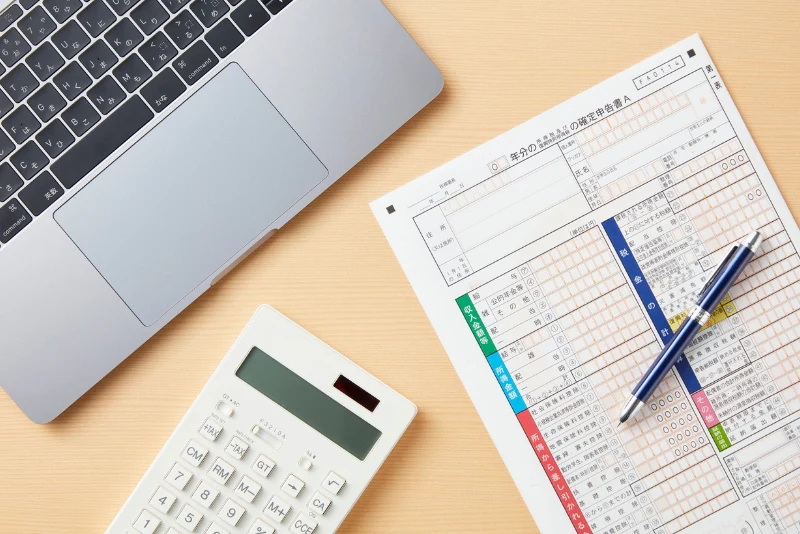
US expat calculating the Foreign Earned Income Exclusion in Oman
📅 Last Updated: July 13, 2026 | ⏱️ 10 min read

Why FEIE Matters More in Oman Than Almost Anywhere Else

In countries with an income tax treaty and meaningful local tax rates, the Foreign Tax Credit often does the heavy lifting. In Oman, there's no local income tax to credit, today, and no treaty to fall back on. That leaves the Foreign Earned Income Exclusion (FEIE) as the single most important tool available to American expats for eliminating US tax on their Omani salary.

US expat qualifying for the Foreign Earned Income Exclusion in Oman

The Two Qualifying Tests

Physical Presence Test: You must be physically outside the United States for 330 full days within any 12-month period. It's a pure day-count test, it doesn't matter which country you're in, only that you're not in the US. A single extended trip home for a family emergency can wreck an otherwise clean year.

Bona Fide Residence Test: You must establish genuine residency in Oman for an entire, uninterrupted tax year. The IRS looks at a long-term lease, local ties, and whether you're a genuine resident rather than a transient contractor. This test is harder to satisfy for rotational or FIFO oil and gas workers whose schedules involve regular blocks of time outside Oman, most rely on the Physical Presence Test instead.

FEIE limitations for Oman expats

Critical Limitation

What FEIE Does Not Cover

The FEIE only shields earned income, salary, wages, bonuses, and self-employment income from active work. It does not shield passive income of any kind.

  • Dividends and interest from US or foreign investments
  • Capital gains from stock or property sales
  • Rental income from US or Omani property
  • Your End of Service Gratuity payout (deferred compensation, taxed in full)

The Foreign Housing Exclusion: An Underused Add-On

Beyond the base FEIE, expats can also claim the Foreign Housing Exclusion (or Deduction, for self-employed filers) for qualified housing expenses above a base amount, rent, utilities (excluding phone), and insurance. This matters disproportionately in Oman, where compound-style expat housing and international school fees carry heavy premiums.

Example: Maximising the Combined Exclusion

You earn $145,000 as a senior engineer in Muscat, with $28,000 in annual housing costs at a company-adjacent compound. FEIE shields $130,000. The Foreign Housing Exclusion can shield a portion of the housing costs above the IRS base amount, further reducing your taxable remainder well below the $15,000 that would otherwise sit exposed.

Result: most or all of the remaining income above the FEIE cap can be sheltered through housing costs alone.

Documentation That Protects Your Claim

For the Physical Presence Test: Keep a day-by-day travel log, every boarding pass, passport entry/exit stamp, and a spreadsheet tallying days outside the US. A flight-tracking app export is a useful backup, not a substitute for passport stamps.

For the Bona Fide Residence Test: Long-term Omani lease agreement, utility bills in your name, employment contract showing an indefinite or multi-year term, and evidence you filed as a resident for local purposes where applicable.

Common Mistake

The First-Year FEIE Trap

Neither test protects you the moment you land in Oman. The Physical Presence Test needs a full 330-day window to accrue, and the Bona Fide Residence Test needs an uninterrupted full tax year. Arrive in Oman in September and you won't have a qualifying 12-month Physical Presence window closed out until the following September, meaning your first partial year abroad often can't be fully shielded no matter which test you use.

The fix isn't to panic, it's to file for an extension. Form 2350 extends your filing deadline specifically so you can wait until you've satisfied a qualifying test, rather than filing early and losing the exclusion for income that would otherwise have qualified.

Worked Example

You start an Omani contract on September 1. By the following US tax deadline (April 15), you've only been outside the US for about 7.5 months, short of the 330-day threshold. File Form 2350 to extend your deadline to roughly September, by which point your rolling 12-month Physical Presence window will have closed and you can claim the full exclusion on your delayed return.

Timing the FEIE qualifying period for a first-year move to Oman

FAQ: FEIE and Oman's Tax-Free Income

Q: What's the FEIE cap for 2025? A: $130,000 per qualifying individual, indexed annually for inflation. Married couples who both qualify and both earn income can each claim their own exclusion.

Q: I spent 40 days in the US this year. Am I disqualified? A: The Physical Presence Test requires 330 full days outside the US in a 12-month period, meaning you can spend up to 35 days in the US within that window and still qualify. Track your specific 12-month window carefully, it doesn't have to align with the calendar year.

Q: Can rotational oil and gas workers use FEIE? A: Yes, typically via the Physical Presence Test rather than Bona Fide Residence, since FIFO rotations (such as 28 days on, 28 off) can make establishing uninterrupted local residency difficult. Days off spent outside the US in a third country still count toward the 330-day threshold.

Q: Does FEIE reduce my Social Security wage base? A: No. FEIE excludes income from income tax, but self-employed individuals still owe self-employment tax on the full amount, since Oman has no Totalization Agreement to offset it.

Q: Can I switch from the Physical Presence Test to Bona Fide Residence in a later year? A: Yes. Many expats start on the Physical Presence Test in year one, then switch to Bona Fide Residence once they've completed a full calendar year in Oman, since it removes the day-count risk around US travel.

Q: What happens if I revoke my Bona Fide Residence status by mistake? A: The IRS treats certain actions, like claiming non-residency on a US state return while claiming Bona Fide Residence on your federal return, as inconsistent. Once revoked, you generally cannot re-elect Bona Fide Residence for five years without IRS consent.

Related reading: No US-Oman Tax Treaty, Oman's 2028 Income Tax.

Key Topics for Americans in Oman

US Expat Taxes in Oman 2026

The complete hub guide to living tax-compliant in the Sultanate as an American.

FEIE & Oman's Tax-Free Income

Physical Presence vs. Bona Fide Residence, and shielding up to $130,000.

No US-Oman Tax Treaty

Why there's no bilateral protection, and the 15.3% self-employment tax trap.

Oman's 2028 Income Tax

How the GCC's first personal income tax changes your FEIE/FTC strategy.

Retiring in Oman

Social Security, IRAs, End of Service Gratuity, and tax-free withdrawal planning.

Filing US Taxes from Oman

Form 1040, 2555, 1116, FBAR and FATCA deadlines and mechanics.

2026 Oman Expat Checklist

Every form, deadline, and document US expats in Oman need this year.

Teachers in Oman

International school contracts, housing allowances, and FEIE for educators.

Ready to Get Started?

Our specialists help Americans in Oman and across the Gulf navigate the FEIE, FBAR, and the region's shifting tax landscape. Schedule your consultation today.